
Hazard Communication – Transition to the Globally Harmonized System (GHS)
The Problem
Imagine driving in a foreign country where all the road signs are unfamiliar. It’s confusing and potentially dangerous. For years, that’s how chemical labelling and hazard communication felt in workplaces—different formats, inconsistent information, and a lack of clarity. Workers had to search for critical safety details, and recognising hazards quickly was often impossible. Today, we’ll discuss the solution: the Globally Harmonised System (GHS), a universal safety language for chemicals. We’ll explore how it simplifies hazard communication, improves workplace safety, and what your role is during this transition.
Identify the Hazards
Under the old system, workers faced the following issues:
- Inconsistent labelling formats made it hard to identify hazards.
- Material Safety Data Sheets (MSDS) varied in layout and detail, making it difficult to locate critical safety information.
- Lack of standardised symbols created language barriers in multicultural workplaces.
Safety Practices and Preventative Measures
The GHS addresses these issues by standardising hazard communication globally. Here’s how you can adapt:
1. Understand Safety Data Sheets (SDS):
- SDS have replaced MSDS and now follow a consistent 16-section format.
- Critical details—such as hazard identification and emergency procedures—are always found in the same place.
- Familiarise yourself with the layout for quick access to safety information.
2. Recognise New Labels:
GHS-compliant labels now include:
- Signal Words: "Danger" or "Warning" to indicate severity.
- Hazard Statements: Standard phrases describing specific risks.
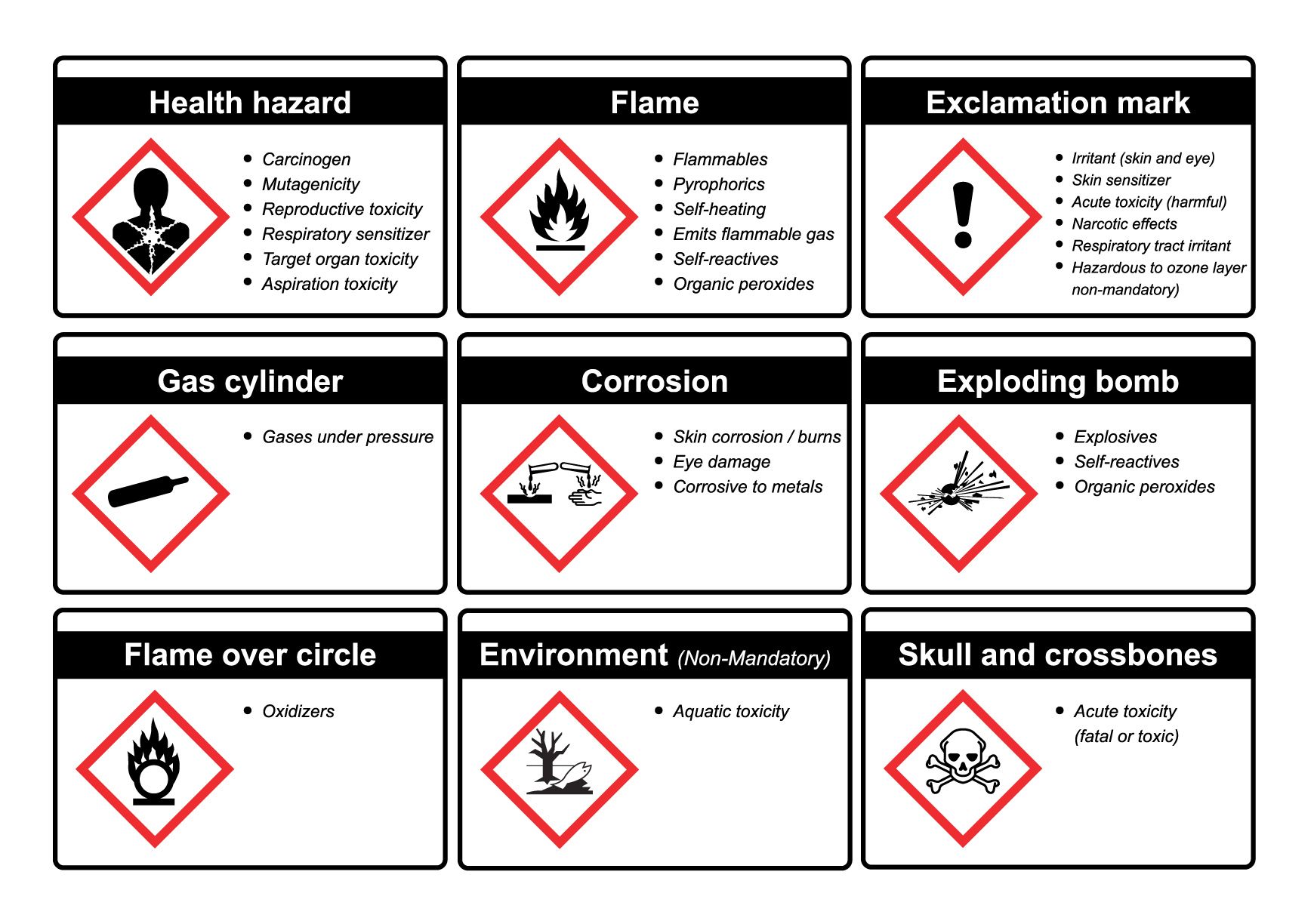
- Pictograms: Visual red diamond symbols indicating the type of hazard.
- Precautionary Statements: Instructions for safe handling, storage, and disposal.
Think of these labels like nutritional labels—clear, concise, and consistent.
3. Learn the Pictograms:
- There are eight GHS pictograms representing hazards such as flammability, toxicity, and corrosion.
- These visuals help workers identify dangers quickly, regardless of language or literacy barriers.
4. Adapt During the Transition:
- You may still encounter both old and new formats during the transition period.
- Learn the new system while maintaining awareness of the old one.
5. Be Proactive:
- Ask your supervisor if you’re unsure about a label or SDS section.
- Share knowledge and help your team adjust to the GHS.
Real-Life Case or Scenario
A worker handled a chemical without realising it was corrosive, as the old label used unfamiliar wording. The worker suffered severe burns. If the label had included a GHS pictogram for skin corrosion, the risk would have been immediately recognised. The new system makes these hazards clear and accessible.
Employee Responsibilities
- Learn the new GHS format for labels and SDS.
- Pay close attention to pictograms, signal words, and hazard statements.
- Report any unclear or missing labels to your supervisor.
- Support your coworkers in learning the system.
Employer Responsibilities
- Provide training on the GHS system, SDS, and labelling changes.
- Ensure all hazardous substances are labelled in line with GHS standards.
- Replace outdated MSDS and labels.
- Ensure workers have access to SDS and understand how to use them.
Discussion & Questions
- What differences have you noticed between old and new labels?
- Which pictograms or label elements help you most when identifying hazards?
- What challenges have you faced while adjusting to GHS?
- How can we support each other in learning this universal safety system?
Commitment/Action Plan
Starting today, commit to reviewing labels and SDS before handling any substance. Familiarise yourself with the new pictograms and encourage others to do the same. Let’s support one another and prioritise a safe transition to the GHS system.
Wrap-Up
While change can be challenging, the GHS replaces confusion with clarity. It’s a universal safety language designed to protect all workers. By learning the system and applying it in your daily tasks, you help make the workplace safer for everyone. Thank you for your commitment to safety.
Standards Overview
WorkSafe New Zealand has adopted the GHS under the Hazardous Substances Regulations in the Health and Safety at Work (Hazardous Substances) Regulations 2017. Employers must:
- Use GHS-compliant labelling and SDS for all hazardous substances.
- Train workers on how to interpret GHS labels and SDS.
- Maintain an up-to-date hazardous substances inventory and ensure SDS are available for all substances.
Disclaimer
These toolbox talks are provided for informational and educational purposes only and are not a substitute for professional legal, health and safety, or regulatory advice.
The content reflects recognised best practices and general industry standards as at the date of publication. However, it may not be applicable to all workplace environments or specific operational contexts.
It is the responsibility of the Person Conducting a Business or Undertaking (PCBU), as well as officers, workers, and other duty holders under the Health and Safety at Work Act 2015 (HSWA), to ensure compliance with all relevant laws, regulations, and WorkSafe New Zealand guidance.
The authors, presenters, and distributors of this toolbox talk disclaim all liability for any loss, damage, or injury arising from the use or reliance on the information provided. Users should seek advice from a suitably qualified health and safety professional or legal advisor for guidance tailored to their specific circumstances.
Always follow your organisation’s policies, procedures, and safe work practices to manage risks and maintain a safe and healthy workplace.
All Rights Reserved Site App Pro 2025